
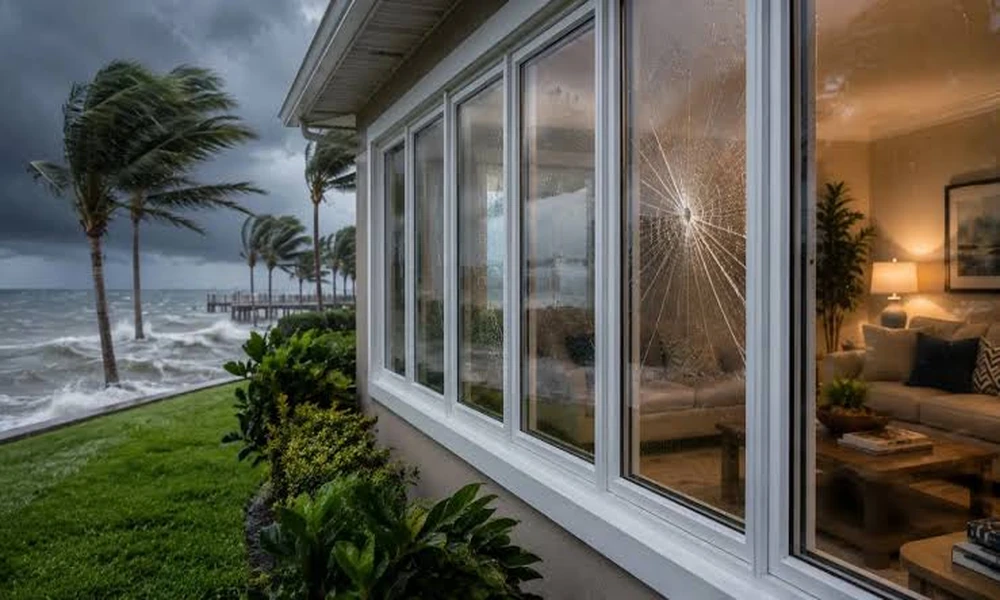
Every June, my neighbor Dave fills his garage with plywood and swears he’ll get to the shutters before the first named storm. He never does. The plywood sits there until October, warped and useless. Meanwhile, the house across the street has glass that has never needed a board, a drill, or a panicked trip to the hardware store. That difference is not luck. It is a decision made once and forgotten about for decades.
If you live anywhere between Tampa Bay and Naples, you already know the drill: tape the windows, stack the patio furniture, refresh the water supply. What most homeowners never think about is that the glass itself can do the heavy lifting. A proper install of impact windows in Sarasota or anywhere along the Gulf coast turns your biggest storm weakness into one of your quietest home upgrades.
Here’s what that actually looks like month to month, not just on the day a hurricane makes landfall.
What Actually Happens to a Window in a Storm
Wind is not the real threat. Pressure is. When a window fails on the windward side of a house, air rushes in faster than it can escape, and the roof gets pushed from underneath. That’s why building codes in coastal Florida treat glazing as structural, not decorative.
Impact glass works by laminating two panes around a flexible interlayer. When debris hits, the outer pane may crack, but the interlayer holds the shards in place and the opening stays sealed. That single detail is the difference between a cracked window and a flooded living room.
The Florida Division of Emergency Management tracks storm preparedness resources for residents statewide, and the product standards behind impact glass are set well above anything a piece of plywood can offer. Plywood protects against flying debris and nothing else. It does not hold pressure, it does not stop water intrusion, and it does nothing for you in a February thunderstorm.
If you want the practical version: a rated window is tested, labeled, and inspected. A sheet of plywood is a guess. I’ll take the tested option every time.
The Benefits Nobody Talks About Until They Own Them
Storm protection is the headline. It is not the reason most people end up glad they made the switch.
Quiet
If you live near a highway, a boat ramp, or a lawn crew that starts at 7 a.m., laminated glass cuts the noise dramatically. You notice it the first night. You stop noticing it after a month, and then you wonder how you ever slept with the old single panes.
Fading
UV light destroys wood floors, artwork, and fabric faster than anything else in your house. Laminated glass blocks the vast majority of it. Your sofa will thank you.
Cooling Bills
According to the U.S. Department of Energy, heat gain through windows is one of the largest drivers of summer cooling load in hot climates. Insulated impact units cut that load, which matters more in Florida than in almost any other state. You are not just buying storm protection. You are buying a lower August bill.
Security
Laminated glass is slow to break and loud when it does. Most break-ins start with a quick smash and grab. That math stops working when the glass holds.
Insurance carriers in coastal counties generally recognize wind mitigation features when pricing premiums. That is not a reason to buy windows on its own, but it is a nice footnote. I would not spend five figures chasing a discount. I would spend it to stop boarding up every June.
How to Decide If the Investment Makes Sense for Your House
Not every home needs the full package. Run your situation through this short checklist before you call anyone.
- Age of the existing glass. Single pane windows from the 1980s are already failing. Replace those first.
- Wind zone. Closer to the coast means stricter code and a stronger case for impact rated units.
- How long you’ll stay. Under five years, you may not recoup the cost in enjoyment. Over ten, the math swings hard your way.
- Your tolerance for prep. Some people genuinely don’t mind shutters. If you’re one of them, be honest about it.
- Which openings matter most. Prioritize the largest sliding glass doors and any window facing the prevailing storm direction.
One more thing: brand matters less than installation. A premium unit installed with a bad seal performs like a cheap one. Ask who is doing the flashing, and ask how they handle the sill. That’s where water gets in.
The Two Percent Rule I Use When Picking a Window Contractor
Here is the framework I recommend to anyone shopping for this work. Call it the two percent rule, because it costs you almost nothing and it filters out most of the bad actors.
Take the total quote, and spend two percent of it on due diligence. Pull the contractor’s license number. Drive past a job they finished two years ago and look at the caulk lines. Call that homeowner and ask one question: would you hire them again?
That last step catches everything. Price shoppers skip it. People who end up happy never do.
| Priority | What to Verify | Why It Matters |
|---|---|---|
| License | Active state registration | Unlicensed work voids most warranties |
| Product rating | Florida Product Approval number | Code compliance and insurance credit |
| Install crew | In-house or subcontracted | Seal quality lives or dies here |
| Warranty | Written, transferable | Matters at resale |
The National Fire Protection Association publishes codes that shape how buildings handle openings under stress, which is a useful reminder that all of this is engineering, not marketing. A window is a system, and systems get installed right or they don’t.
Where Homeowners Get This Wrong
The most common mistake is treating this as a storm purchase. It isn’t. You will live with these windows on the 350 days a year when the weather is perfect. That is where the value lives, in the quiet, the cooler rooms, the furniture that keeps its color.
The second mistake is waiting for the insurance company to force the issue. By then, you are replacing on someone else’s timeline and often with whoever is available, not whoever is best.
Buy the glass for the life you live the rest of the year. The hurricane protection comes along for free.
If you’ve been putting this off, start with one room. The difference is obvious the first afternoon you sit in it without hearing the street. Which window in your house would you replace first? If you can answer that, you already know where to begin.
