
Most backyard projects in South Florida fail in the same boring way: they get designed for the two weeks of perfect weather in January. I’ve watched a dozen neighbors learn this the hard way, and the pattern is always the same. Great furniture in November. Faded cushions and a flooded patio by August. Planning for the mild month instead of the brutal one is the single most expensive mistake you can make on a Miami yard.
The fix isn’t a bigger budget. It’s sequencing. Get shade, drainage, and material choice right and you can add the pretty stuff later. Get them wrong and no amount of teak and string lights will save the space.
Think of it as designing for two seasons that happen at the same time. That’s what I call the Two Season Rule: every element in your yard has to survive a wet season and a dry season, and it has to look good in both. When people ask about custom outdoor living spaces in Miami, the good builders start with this idea before they start with furniture catalogs. Follow that order and you’ll end up with a yard you actually use from May through October, not just at the holidays.
Why shade comes before furniture, every single time
Buy the pergola before the sectional. If that sounds backwards, stand on your patio at 3 p.m. in July without shade and time how long you last. The honest answer is under five minutes.
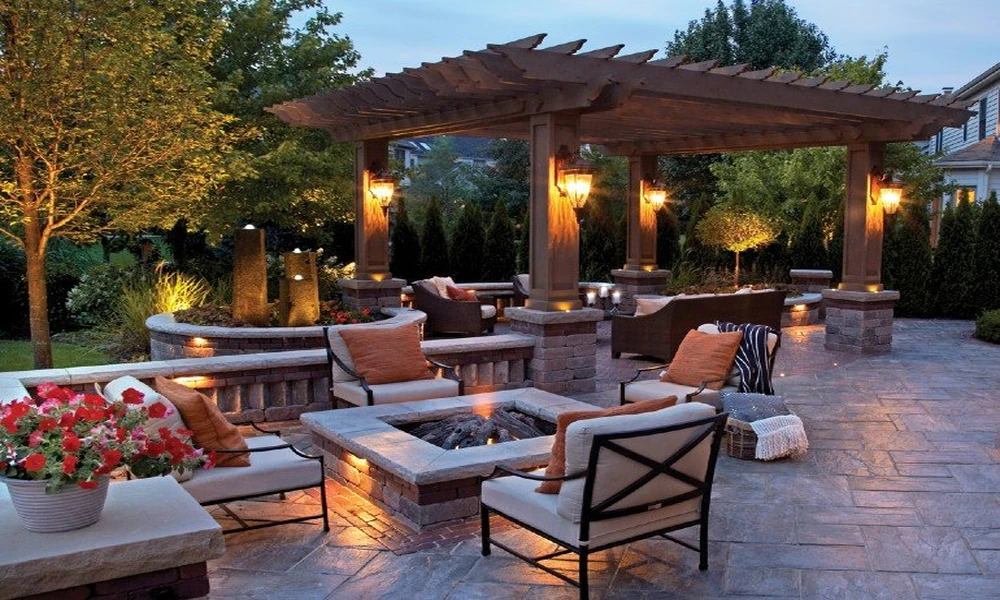
Shade in this climate isn’t a design accent. It’s the thing that decides whether a space gets used. A solid roof structure, a slatted pergola, or a mature tree canopy all work, but each one changes how much air moves and where water drains. Pick the structure first and your furniture layout follows. Pick the furniture first and you end up pushing it around a patio that’s only usable at dusk.
Here’s the opinion I’ll defend at any barbecue: in Miami, a covered conversation area beats a pool every time for daily use. Pools are fantastic, and I’d never talk you out of one. But the covered corner is where you’ll actually drink coffee, work on a laptop, and eat dinner. Spend accordingly.
Drainage is the part nobody wants to talk about
South Florida gets a lot of rain, and it gets it fast. According to the National Weather Service, thunderstorms are a routine part of the summer pattern here, which means a flat patio with no plan for water is a swimming pool waiting to happen. If the grade around your house already drains toward the house, no renovation will fix that, and a designer who ignores it is setting you up for resealing the same pavers forever.
Walk your yard after a heavy afternoon storm and watch where the water collects. That low spot should decide where the pergola goes, where the turf stays, and where you plant. Fight it and you’ll lose. Design around it and your patio will dry out hours before your neighbor’s.
Pick materials for salt, sun, and humidity
Wood rots. Foam cracks and smells. Cheap metal rusts at the welds. This isn’t me being dramatic; it’s the standard result of importing a Northern design into a tropical climate. The materials that hold up here are the ones that don’t care about humidity.
What tends to survive:
- Pavers over poured concrete, because they can shift slightly with the ground and can be lifted for repairs without a jackhammer.
- Powder-coated aluminum or marine-grade stainless for structure and hardware. Bronze and black finishes hide water spots better than white.
- Solution-dyed acrylic or performance outdoor fabric on cushions, because the color goes all the way through the fiber.
- Native and Florida-friendly plantings instead of thirsty lawn, which needs less irrigation once established.
Skip anything with a warranty that says “not for coastal environments.” That’s the manufacturer politely telling you it won’t last.
Grow the right things, and let them shade the yard
Plants are the cheapest shade you’ll ever install, and they’re the part most people rush. A mature canopy tree can drop the temperature under it by a noticeable amount, and it does it without a permit or an electric bill. According to research from Florida State University, urban tree cover is a real tool for cooling hot outdoor spaces, which is why so many Miami yards feel wildly different from one block to the next.
My recommendation: choose a small number of high-impact species over twenty varieties. One good shade tree, a row of low hedging along the property line, and a bed of drought-tolerant ground cover will do more for your yard than a plant collection you can’t keep watered. Clumping palms over invasive ones. Gravel or mulch over bare soil. And keep the beds pulled back a few feet from the house so your exterior walls can breathe.
Test your patio before you commit
Here’s a step most people skip and regret. Before you pour or lay anything, mark the patio outline with string and stakes, then live with it for a week. Walk out in bare feet at 2 p.m. and stand on the material sample you’re considering. If the pavers are too hot to stand on, they’ll be too hot for a dog or a kid, and you’ll want a lighter tone or a different finish.
Then run this short checklist before signing anything:
- Does the grade move water away from the house?
- Is there shade during the hottest part of the day, not just at sunset?
- Can the covered area handle a sudden storm without your cushions floating?
- Do the materials list a coastal rating?
- Is the lighting low-glare and on its own switch?
Five yes answers means you can move on to the fun part, which is picking a sofa.
Keep the water bill small while it looks green
A lush-looking yard doesn’t have to be a water bill you dread. Drip irrigation on its own zone, a few inches of mulch, and plants that belong here will keep things green with far less effort than spray heads that lose half their water to evaporation. The U.S. Environmental Protection Agency has written a lot on efficient landscape watering, and the core advice holds up in South Florida as well as anywhere: water less often, water deeper, and let the soil do the work.
I’d spend the money on a smart irrigation controller before I’d spend it on anything decorative. It’s the least glamorous purchase in the whole project and the one that quietly pays you back every month.
A yard that works all year
Get the structure, the drainage, and the plants right and everything else gets easy. Add furniture once the shade exists. Pick materials that laugh at humidity. Test the ground with your bare feet before you sign a contract. The good news is that most of this costs nothing but attention, and the payoff is a patio you’ll use in July, not just in January.
So before you buy the first piece of furniture, ask yourself one question: if this was the rainiest, hottest month of the year, would I still want to sit out here? If the answer is yes, you’ve planned a real outdoor living space. If it’s no, you’ve still got a yard, and there’s time to fix it.
