
“Lifetime warranty” might be the two most misread words in home improvement. I’ve watched three neighbors in Mililani sign coating contracts on that phrase alone, and two of them were shocked later by what the paperwork quietly excluded. The truth is that a lifetime floor coating warranty is real and valuable, but it behaves more like a maintenance agreement than a golden ticket. It covers specific failures, for a specific owner, under specific care. Miss those terms and the promise evaporates.
So here’s what this covers: how lifetime warranties on concrete coatings actually work, the five clauses that decide whether your claim survives, and how to read a contract before you sign it. By the end you’ll know which questions to ask, which answers matter, and which warranty is worth paying extra for.
What a lifetime coating warranty actually promises
Read the fine print on most residential coating warranties and you’ll find the same core promise: the coating will not peel or delaminate from the slab under normal use, and the manufacturer will replace the material if it does. That’s it. The warranty protects against adhesion failure, not against scratches, chips, scuffs, or a fading color you’ve grown tired of.
That distinction drives everything. If your floor peels in year four, you’re probably covered. If your Labrador claws the finish down to bare concrete, you’re not. Labor coverage also varies wildly. Some installations include labor for the life of the warranty, others cover materials only after the first couple of years, which means a covered failure could still cost you hundreds in crew time.
My honest take: labor coverage is the clause worth paying for. A free bucket of coating doesn’t help much when you’re the one footing a four figure install bill.
Who actually backs the guarantee?
There are two signatures that matter and most homeowners only check one. The first is the manufacturer, the company that made the resin. The second is the installer, the crew that prepped and poured your slab. You want both.
Manufacturer warranties tend to be more stable because coatings companies stay in business longer than individual crews do. But a manufacturer’s warranty usually hinges on the installer following the exact prep and application spec, so the two documents hold each other up. If your installer isn’t certified by the brand they’re spraying, the manufacturer can decline a claim and point at the application method. That’s the loophole nobody mentions at the kitchen table.
Ask to see the actual warranty document before you sign the estimate. Not a brochure. The document. If the salesperson can’t produce it same day, that’s an answer too.
The clauses that kill coverage
Five things void the average coating warranty, and they show up in almost every contract regardless of brand or island:
- Improper surface prep. Coatings bond to concrete, not to dirt, sealer, or old paint. A skipped grind or a dusty slab is the number one cause of failure.
- Moisture vapor coming through the slab. If your concrete has no vapor barrier and pushes moisture up, the coating blisters from underneath. Some warranties exclude this outright.
- Chemicals outside the approved list. Battery acid, certain solvents, and industrial cleaners can eat a residential grade finish.
- Transfer of ownership. Many lifetime warranties die when you sell the house unless the contract says otherwise and you file the transfer paperwork.
- Missed registration. Plenty of warranties require you to register within a set window after install. Skip it and your coverage may never activate.
The registration point matters more than people think. The Federal Trade Commission has long required warranty terms to be disclosed before purchase, precisely because so many buyers only discover the conditions after something goes wrong. Read the terms at the table, not from a ladder.
A warranty is only as good as the prep underneath it
Here’s the part that separates a paper promise from a floor that actually lasts. Coatings fail from the bottom up. Blistering, peeling, and edge lifting almost always trace back to moisture, oil residue, or a slab that was never profiled correctly. The resin is rarely the weak link.
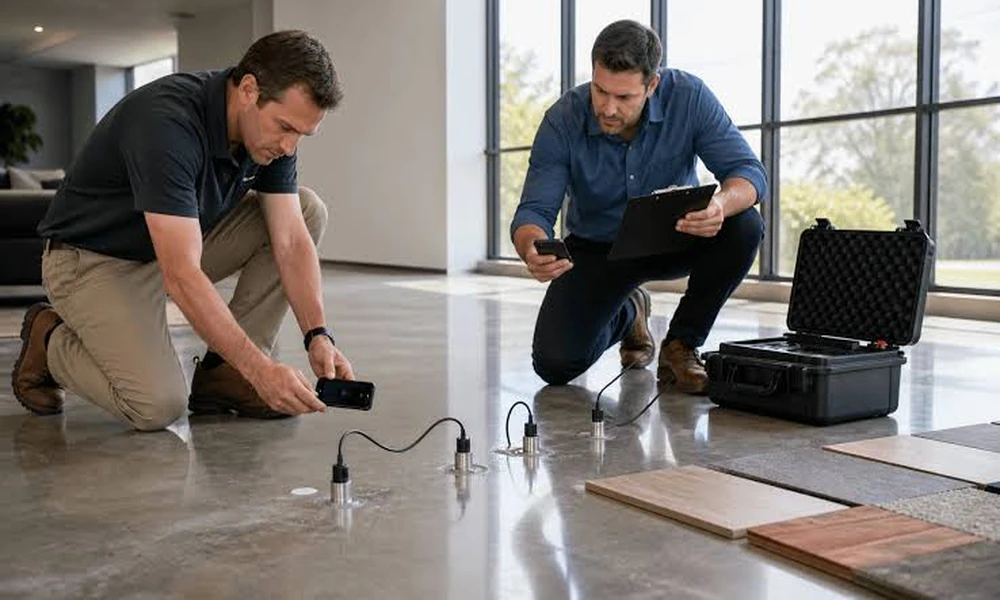
That’s why serious installers spend more time on prep than on spraying. Diamond grinding to open the concrete’s pores. Moisture testing with a meter or plastic sheet test before anyone opens a bucket. Crack repair and patching that gets a full cure before the base coat goes down. The Occupational Safety and Health Administration publishes guidance on silica dust controls for exactly this kind of grinding work, which tells you how much airborne material a proper prep day generates.
When you interview installers, skip the resin talk for a minute and ask what their prep day looks like. A crew that can describe their grinding sequence and moisture testing without pausing is a crew that expects its warranty to hold.
The Pillar Test: five questions to ask before you sign
I use a simple screen with clients and it has never failed me. I call it the Pillar Test, because five questions hold up the whole guarantee, and pull any one out and the structure leans.
- Who is the warrantor, manufacturer, installer, or both, and what is each one’s legal name on the document?
- What exactly is covered, and does the wording say peel and delamination, or the vaguer “defects in materials”?
- Is labor covered, for how many years, and who schedules the repair crew?
- What voids it, in writing, with the moisture and chemical exclusions listed by name?
- Does it transfer if you sell, and what is the filing window?
If a company answers all five in plain sentences, you’re likely dealing with a real warranty. If any answer starts with “well, basically,” keep shopping.
What installers won’t volunteer about moisture
Hawaii adds a wrinkle mainland warranties weren’t written for. Our humidity sits high year round, and plenty of slabs here were poured without a vapor barrier, especially in older neighborhoods. A coating applied over a slab that moves moisture will blister, and no manufacturer will pay for a condition the installer should have caught during the estimate.
So the best installers build a moisture plan into the quote. A vapor barrier primer, a moisture tolerant base coat, or an honest conversation that this slab needs treatment first. That extra step is why a properly specified system on Oahu often carries durable concrete floor coatings with lifetime warranty language alongside an assessment of the slab itself. The warranty and the site evaluation travel together, and any quote that skips one is selling you half a project.
The federal government’s own facility standards offer a useful reality check here. The General Services Administration maintains published guidance on concrete floor coatings for its buildings, and the through line is always substrate condition and application environment. Coverage language is secondary to the slab.
How to protect your coverage after install day
Once the crew leaves, you become a co-signer on your own warranty. A few habits keep it alive:
- Register the warranty the same week, online if there’s a portal, and keep the confirmation email in your closing documents folder.
- Sweep or dust mop regularly. Grit is what scratches finishes, not foot traffic.
- Clean with the products named in the care guide, nothing ammonia based on a polyurea or epoxy finish.
- Photograph the floor right after install and date the photos. Timestamped images settle most disputes about when damage appeared.
- Report bubbling, lifting, or edge peeling immediately, not at the end of the season. Delay gives any manufacturer an argument.
Do those five things and you’ll likely never use the warranty. Which, honestly, is the goal.
The bottom line
A lifetime warranty on a floor coating isn’t marketing fluff, but it isn’t insurance either. It’s a conditional promise that rewards informed buyers and punishes rushed ones. Vet the warrantor, read the exclusions at the table, ask about moisture before you talk about color chips, and register the paperwork the week your floor cures. Pick the installer who answers the Pillar Test without flinching, because the best warranty in the world still depends on what happened the morning the grinder came out.
Get a written warranty document in hand before you compare a single quote. If a contractor won’t show it to you, what else are they keeping off the page?
