
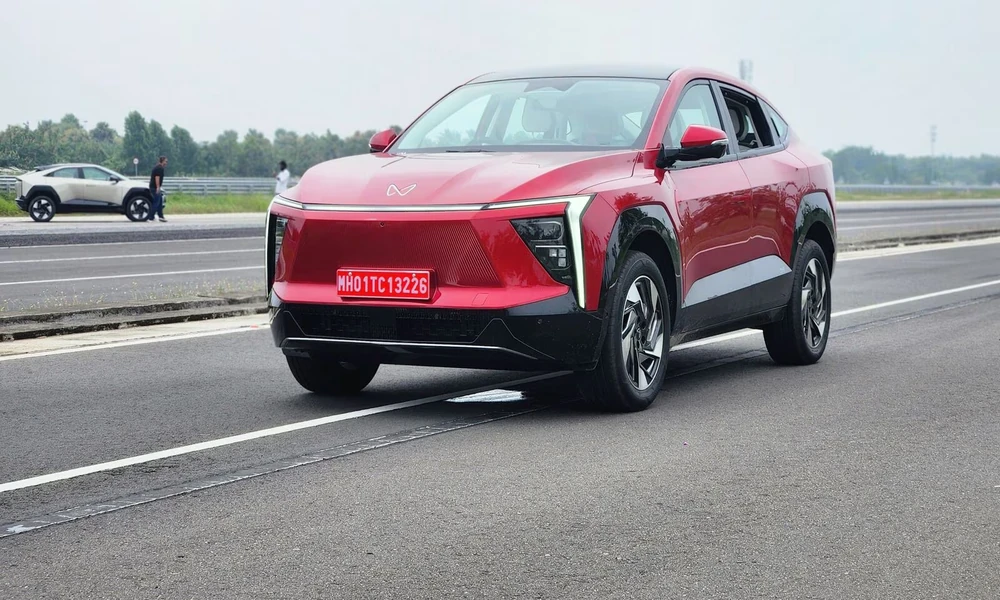
Almost everyone who buys an electric SUV says the same thing a month in: “I wish I’d known that before.” Not because they regret it. Because the reality is better in some ways and messier in others than any brochure lets on. So before you make a five-figure decision, here’s a straight look at what actually changes when you go electric.
The EV Market Has Already Crossed a Tipping Point
This is not a niche anymore. EVs represented 10.6 percent of new light-duty vehicle sales in Q3 2024, up from 9.96 percent the quarter before, according to the Alliance for Automotive Innovation’s Q3 2024 Get Connected Electric Vehicle Report. When roughly one in ten new vehicles sold in the U.S. is electric, the supply chain, the service industry, and the resale market all start orienting around that reality. Waiting for EVs to “mature” is a bit like waiting for smartphones to catch on in 2012.
What that market share number doesn’t tell you is how different the ownership experience feels from a conventional SUV. Spoiler: the differences hit hardest in the first two weeks, and most of them fade into routine faster than you’d expect.
Your Garage Is Now Your Gas Station (And That’s the Big One)
This is the mental shift that trips people up most. You stop thinking about fueling as an errand you run when the needle drops. Instead, you plug in at home most nights, and you wake up to a full charge. For the average commuter, that alone removes the single most annoying weekly chore of car ownership.
The catch is that “plug in at home” requires actually having somewhere to plug in. A standard 120V wall outlet charges painfully slowly, adding roughly 3 to 5 miles of range per hour. A Level 2 home charger, which runs on a 240V circuit similar to your dryer outlet, bumps that to 20 to 30 miles per hour. If you’re in a house with a garage, installing a Level 2 charger is straightforward and genuinely worth doing before you take delivery.
Apartment dwellers have a harder time, but the public network is growing fast. From 2019 to 2024, the rate of public charging infrastructure deployment grew about 25 percent annually, according to a 2025 report from the International Council on Clean Transportation, with approximately 204,000 public chargers deployed across the United States by the end of 2024. That’s a very different world than five years ago.
Range Anxiety Is Real, But It’s Mostly a First-Month Problem
Almost every new EV driver obsesses over range in the first few weeks. They check the remaining miles constantly, they plan every trip around charging stops, and they feel a low-level tension that wasn’t there with gas. This is normal. It also passes.
Here’s the honest framework for figuring out whether a specific EV range actually fits your life. Call it the Range Reality Check:
| Daily Drive Profile | Range You Actually Need | Fits Most 2024 Electric SUVs? |
|---|---|---|
| Under 50 miles/day, home charging | Any range above 200 miles | Yes, comfortably |
| 50 to 100 miles/day, home charging | 250+ miles recommended | Yes, for most models |
| Frequent 150+ mile day trips, no home charger | 300+ miles plus fast-charge access | Selective – pick carefully |
| Rural area, no public chargers nearby | Highest range available, or wait | Situation-dependent |
Take a Central Valley commuter driving between Visalia and Fresno daily. That’s roughly 45 miles round trip. A modern electric SUV with 280 miles of rated range will cover that commute six days on a single charge. The anxiety comes from treating rated range like a gas tank that must stay above a quarter. It’s not. Think of it more like your phone battery: you charge it overnight, you use it through the day, you rarely run it to zero.
The Charging Network Question Depends Where You Live
Public charging is genuinely uneven. According to a 2024 analysis by Pew Research Center, 64 percent of Americans live within 2 miles of a public EV charging station, while 39 percent live within a single mile. That sounds reassuring until you realize the other 36 percent of the country faces a very different situation.
California is one of the better-served states by a considerable margin, which matters a lot if you’re based in or around the San Joaquin Valley. Most highway corridors along I-5 and Highway 99 have DC fast chargers close enough to make long-distance road trips genuinely manageable. The trickier spots are smaller towns and rural routes where you might go 60 or 70 miles between stations.
The practical answer: before you buy any electric SUV, pull up the PlugShare app or the U.S. Department of Energy’s Alternative Fuels Station Locator and map your regular routes. If you see coverage, you’re fine. If you see gaps, factor in how often you’d actually hit them, because once-a-year camping trips look very different from weekly drives to see family.
What to Actually Look for When You’re Shopping
Not all electric SUVs are built the same, and the spec sheet leaves out the stuff that matters most on day 40 of ownership. Here’s what deserves your real attention:
- Charging speed (kW), not just range. A 150 kW fast-charge capability gets you back to 80 percent in under 30 minutes. A 50 kW vehicle takes well over an hour. That difference is invisible in a parking lot test drive and enormous on a road trip.
- One-pedal driving. Most electric SUVs let you set regenerative braking high enough that you almost never touch the brake pedal in city driving. It sounds weird. It becomes addictive within a week.
- Software and over-the-air updates. The best electric SUVs improve after you buy them. Features get added, range estimates get refined, and bugs get fixed without a service appointment.
- Frunk space. A front trunk sounds like a novelty. After your first beach trip where you’ve got wet gear in the frunk and groceries in the back, you’ll wonder how you lived without it.
If you’re in Central California and want to see how this translates into an actual vehicle, the Ford Mustang Mach-E for Sale in Visalia is worth putting on your shortlist. The Mach-E is a strong example of how far the practical, everyday electric SUV has come, with a distinct design that doesn’t look like it’s trying to apologize for not having a tailpipe.
“The biggest barrier to EV adoption isn’t technology or cost. It’s familiarity. Once drivers experience the routine, most report they wouldn’t go back.” This consensus view has been echoed repeatedly across consumer research in the EV space, reflecting the consistently high owner satisfaction scores that electric vehicle surveys have reported since 2021.
A Quick Pre-Purchase Checklist
Before you schedule a test drive, run through these honestly:
- Do you have a place to install a Level 2 home charger, or reliable access to public charging near your home?
- Is your most common daily mileage comfortably under 70 percent of the vehicle’s rated range?
- Have you mapped the fast-charge options along the routes you actually drive, not just the ones you drive twice a year?
- Have you checked current federal and state incentives? Credits change, and what applies this year may not apply next.
- Have you driven it? Not read about it, not watched a YouTube review. Sat in it, put it in drive, felt the instant torque?
If you can check most of those boxes, you’re probably a good fit. If two or three are question marks, figure those out first. A test drive costs nothing and answers more than any spec sheet.
The switch to electric isn’t perfect for everyone right now. But for a growing number of drivers, especially in California where the infrastructure and incentives are strongest, it’s already the obvious choice. The only question left is which one you’re driving home.
